Mobile Games /
Project Sekai Teams Up With Japanese Restaurant Chain Cocos for Nationwide Character Campaign
Sega and Colorful Palette partner with Cocos restaurant chain for a nationwide Project Sekai campaign featuring exclusive merchandise and voice displays.
Key facts
- Topic:
- Mobile Games
- Published:
- 2026-10-14
- Reported by:
- Gameforce Mobile News Desk
Key takeaways
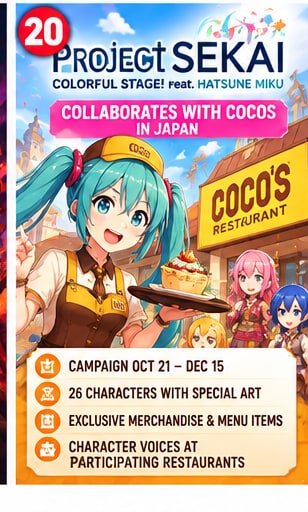
- Nationwide campaign runs October 21 through December 15 across 504 Cocos restaurants in Japan.
- Features 26 characters from all six units dressed in custom restaurant staff uniforms.
- Offers collectible clear files, themed drinks, limited merchandise, and in-store character voice announcements.
Sega and Colorful Palette's popular rhythm game Project Sekai: Colorful Stage featuring Hatsune Miku is preparing another real-world promotional collaboration, this time with Japanese family restaurant chain Cocos. Announced on October 14, the campaign is scheduled to run from October 21 through December 15 across participating Japanese restaurants.
The collaboration features twenty-six characters representing the game's six musical units, with specially illustrated artwork depicting them in restaurant staff-inspired outfits. Customers purchasing selected menu items will be able to receive limited-edition clear files, while additional promotional products include themed drinks, collectible bottles and exclusive merchandise. Participating restaurants will also feature character voice recordings and promotional displays.
Certain locations will receive additional decorations, while online promotional activities provide opportunities to win further rewards. The campaign is expected to involve approximately 504 Cocos restaurants across Japan, excluding airport locations. Project Sekai has established a substantial audience by combining rhythm gameplay with recognisable characters, original music and ongoing narrative content.
Its relationship with the wider Hatsune Miku universe also provides opportunities for collaborations extending beyond conventional gaming. Restaurant promotions are particularly effective in Japan because they transform digital characters into tangible collectibles while encouraging fans to visit physical locations. However, the campaign should be understood primarily as a Japanese promotional activity rather than a worldwide in-game event.
International players should not assume that the merchandise will be distributed through their local restaurants. For Japanese fans, the collaboration provides another opportunity to collect character artwork and themed products. It also demonstrates that virtual performers have become remarkably successful at finding employment outside the music industry.